 Reindeer Sledding Tromso Norway
Best Time of Year for Reindeer Sledding in Tromsø: Month-by-Month Guide
The best time for reindeer sledding in Tromsø runs from February to early April, when snow cover is deep, the sun is back and the light lasts long enough to see the Lyngen Alps from the sled. January is just as snowy and colder, and some travellers prefer it for the dark skies. Late November and December work if you want polar night and the northern lights, but daylight is scarce and thin snow can shorten rides. The season is short and snow driven. Reindeer sledding runs from roughly November to early April, and every listing warns that rides can be cut back when snow is poor. This guide walks through each month with daylight hours, temperatures and snow days, then compares morning, afternoon and evening departures across the Tromsø reindeer sledding catalog.
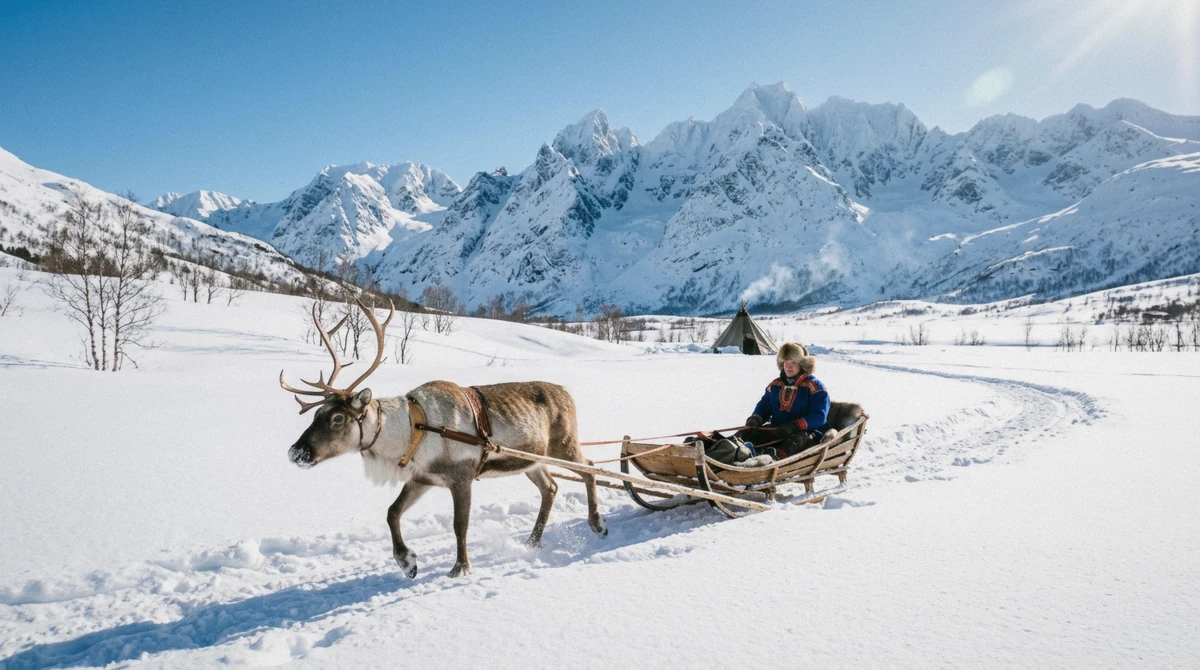
Illustrative image of a sled ride in March sunshine.
Quick answer February to early April, with a polar-night case for December
February to early April is the best window for reindeer sledding in Tromsø. Snow is at its deepest, temperatures sit around -5°C (23°F) to -2°C (28°F) in the afternoon and daylight climbs from about 7.5 hours in mid-February to 11.5 hours in mid-March. December is the choice for polar night and the northern lights, accepting almost no daylight. November is the least reliable month because the snowpack is still building. Every sledding listing can shorten or cancel the ride in poor snow, with a partial refund while the rest of the tour runs.
Key takeaways
- Best window: February to early April, when deep snow meets returning daylight and manageable cold.
- Runner-up: December, traded against polar night. The Night Reindeer Sledding, Sami Dinner and Chance of Northern Lights is built for those dark hours.
- Weakest month: November, with about 4 hours of daylight and only about 7 snow days, so rides are more often cut short.
- Snow is the deciding factor, not cold. Even in April, 6.4 snow days a month keep trails rideable while the afternoon high reaches about 2°C (36°F).
- If you want the longest fixed ride on the calendar, the Long Reindeer Sledding and Sami Culture Tour from Tromsø runs morning and afternoon slots all winter.
Best Time to Go, by Traveler Type
If You want the northern lights and do not mind the dark
Book late November through December, when polar night means dark skies all day. An evening departure such as Reindeer Sledding with a Chance of Northern Lights and Bidos Dinner is made for this window.
If You are travelling with young children
Choose February or March. Daylight of about 7.5 to 11.5 hours makes daytime departures easy, and the cold is steady rather than extreme. Check the reindeer sledding with kids guide for age rules per listing.
If You have fixed dates in late February
Go. February has deep snow and returning light, and Sámi National Day falls on 6 February. Free cancellation up to 24 hours before the start makes an early booking low-risk.
If You want photos of mountains and reindeer in daylight
Pick March. With about 11.5 hours of daylight in mid-March you get long blue mornings and real alpenglow on the Lyngen Alps, as on the Reindeer Sledding and Sami Cultural Tour with Lunch near the Lyngen Alps.
If You are watching the budget
The cheapest listing, from $113 per person, runs all season, so pick the month for snow and light, not price.
Reindeer Sledding Season at a Glance
Reindeer sledding in Tromsø is a winter activity that runs roughly from November to early April. The table below uses typical figures from the Open-Meteo ERA5 reanalysis for the Tromsø area, daily data for 1996 to 2025. Snowfall days means days with 1 cm of snow or more.
The Verdict column gives a three to five word call for each month.
| Month | Daylight | Typical high / low | Snow days | What it means | Verdict |
|---|---|---|---|---|---|
| January | 1 hour mid-month, polar night until about 14 January | -5°C (23°F) / -10°C (14°F) | 10.8 | Deep snow, blue twilight days, dark skies for the lights | Good, very dark |
| February | About 7.5 hours | -5°C (23°F) / -10°C (14°F) | 10.3 | Sun back, snowpack at full depth, Sámi National Day on 6 February | Best overall |
| March | About 11.5 hours | -2°C (28°F) / -7°C (19°F) | 10.8 | Long bright days, reliable trails, mildest deep-snow month | Best overall |
| April | About 16 hours | 2°C (36°F) / -3°C (27°F) | 6.4 | Still snowy early in the month, rides can shorten as it thaws | Good, early April |
| November | About 4 hours, polar night from about 27 November | -1°C (30°F) / -6°C (22°F) | 7.0 | Snowpack still building, rides more often cut short | Fair, thin snow |
| December | None, polar night all month | -4°C (25°F) / -9°C (16°F) | 10.2 | Full polar night, best aurora odds, limited daylight | Good for the lights |
The season splits cleanly. January through March all average about 10 or 11 snow days a month, which is why those months carry the most reliable sledding conditions. November sits clearly below them at 7.0 snow days, and April drops to 6.4 as the thaw approaches.
December matches the deep-winter snow numbers while adding total polar night.
Temperatures and Snow, Month by Month
Typical values for the Tromsø area grid cell, which runs a little colder than the harbour front. Camps inland, such as Camp Tamok in the Tamokdalen valley, can be colder again.
| Month | Average high | Average low | Days with 1 cm+ snowfall |
|---|---|---|---|
| January | -5.4°C (22°F) | -10.4°C (13°F) | 10.8 |
| February | -5.1°C (23°F) | -10.0°C (14°F) | 10.3 |
| March | -2.1°C (28°F) | -7.0°C (19°F) | 10.8 |
| April | 2.3°C (36°F) | -2.9°C (27°F) | 6.4 |
| November | -0.9°C (30°F) | -5.6°C (22°F) | 7.0 |
| December | -3.9°C (25°F) | -9.0°C (16°F) | 10.2 |
January is the coldest month on these numbers, with a typical low near -10°C (14°F). April is the mildest season month, and it is also the driest for new snow, so the season tapers rather than stops.
The Best Month If You Only Have One Morning
- March, if daylight matters. About 11.5 hours of light and 10.8 snow days, with afternoon highs around -2°C (28°F).
- February, a close second. Nearly as snowy at 10.3 snow days, a few degrees colder, and the sun is only just back.
- January, if you accept darkness. Polar night lasts until about 14 January, so a morning slot runs in blue twilight at best.
- Early April, if you want milder air. Expect about 2°C (36°F) in the afternoon and accept that rides can shorten as the snow softens.
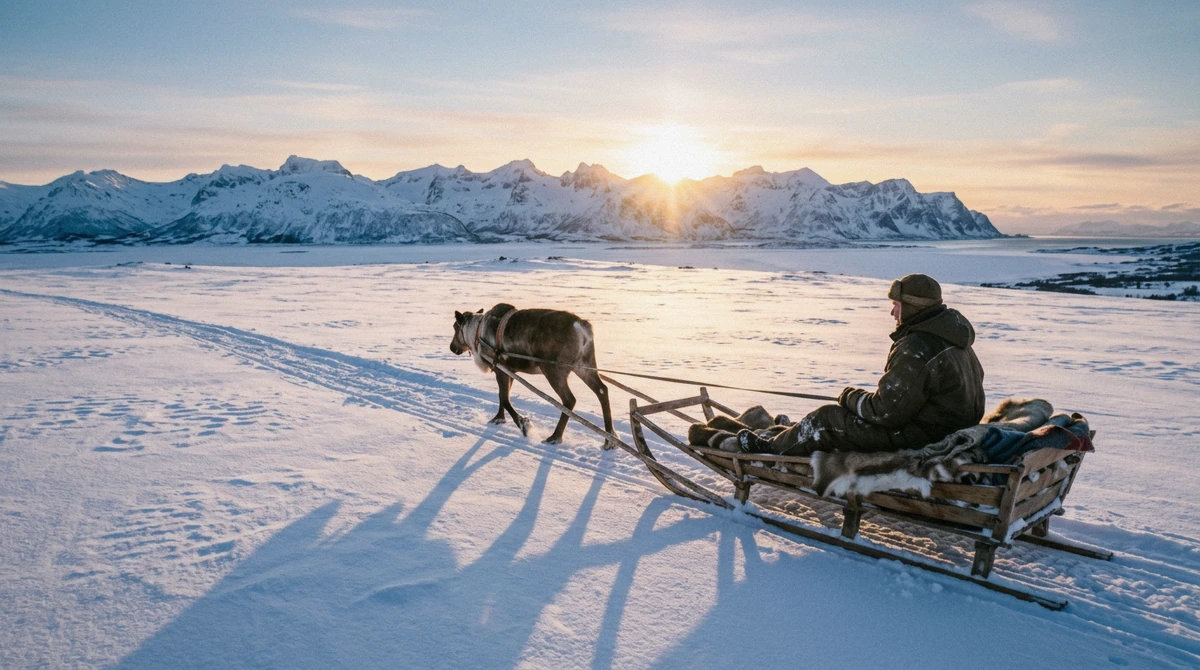
Illustrative image of the returning sun in February.
The Worst Time to Visit, Honestly
Late autumn is the weakest stretch for sledding. November averages 7.0 days with snow of a centimetre or more, against roughly 10 in the deep-winter months, so the trails are still forming. Daylight shrinks to about 4 hours by mid-November and polar night begins around 27 November.
Listings state plainly that rides are shortened or replaced when snow is thin, with a partial refund while the rest of the day runs.
The window still works for two kinds of traveller. Aurora chasers get dark skies from late afternoon onward. If your heart is set on a long ride across open snow, wait for February or March instead.
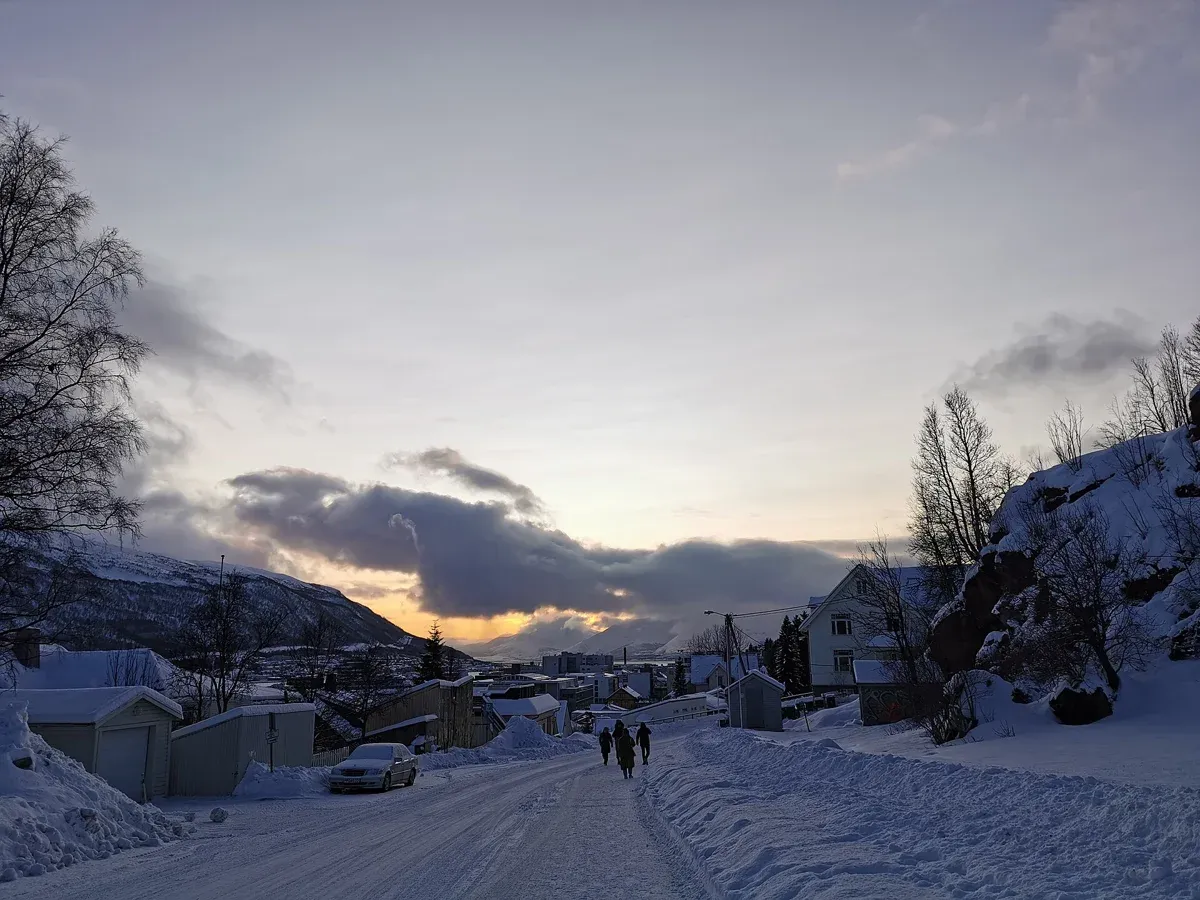
Tromsø city centre in winter, seen from Dramsveien. Photo: Harald Groven from Tromsø, Norway, CC BY-SA 2.0, via Wikimedia Commons.
November: Early Season and the First Dark Weeks
November is the transition month. The average high is -0.9°C (30°F) and the average low -5.6°C (22°F), so the snow cover is still building. Daylight falls from about 9 hours in mid-October to about 4 hours in mid-November, and polar night starts around 27 November.
Only about 7 days in the month bring a centimetre or more of new snow.
What this means in practice is a higher chance that the sled portion is trimmed. The listing for Reindeer Sledding at Camp Tamok in the Tamokdalen Valley is typical of the inland camps, about 90 minutes by bus from Tromsø. If you book November, keep your plans flexible and read the snow-refund terms before you pay.
December: Polar Night and Northern Lights
From about 27 November to about 14 January the sun does not rise over Tromsø. December sits fully inside that window, with no daylight at all, a typical high of -3.9°C (25°F) and about 10.2 snow days. The days are blue twilight around midday rather than total darkness, which is enough to see the reindeer and the landscape in a muted blue light.
This is the month for the dark-sky listings. The camp that runs the Night Reindeer Sledding, Sami Dinner and Chance of Northern Lights builds the whole evening around the dark, with a 15 to 20 minute sled ride, a three-course dinner with bidos and time outside afterwards to look for the lights. Tromsø lies within the auroral zone, where the northern lights may be visible from late August to early April, but clear skies and darkness are essential.
December gives the darkness, the sky decides the rest. The honest trade-off is that you will not see much of the scenery, and any daytime sightseeing has to fit into a couple of twilight hours.
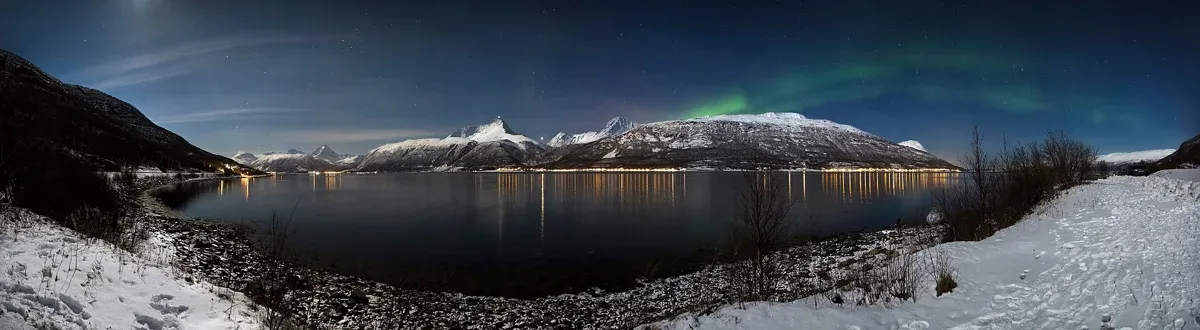
Storfjorden and the Lyngen Alps on a winter night. Photo: Ximonic (Simo Räsänen), CC BY-SA 3.0, via Wikimedia Commons.
January to February: Deep Snow, Deep Cold, Sámi National Day
January and February are the coldest months, with afternoon highs near -5°C (23°F) and typical lows around -10°C (14°F). They are also among the snowiest, at 10.8 and 10.3 snow days. January stays in polar night until about 14 January, then daylight returns fast, reaching about 7.5 hours by mid-February.
The 6th of February is Sámi National Day, which marks the first Sámi congress held in Trondheim in 1917. In Tromsø it is marked at the university and the city hall every year.
A winter visit pairs naturally with learning about the Sámi, the Indigenous people of Sápmi. Around 2,800 people work full-time in reindeer herding in Norway, and several camps here are run by Sámi guides who share stories, joik and a hot meal in the lavvu. The Long Reindeer Sledding and Sami Culture Tour from Tromsø runs morning and afternoon departures through these months, with a 30 minute sled ride and lunch in a Sami tent.
Dress for the cold, and see the what to wear reindeer sledding guide before packing.
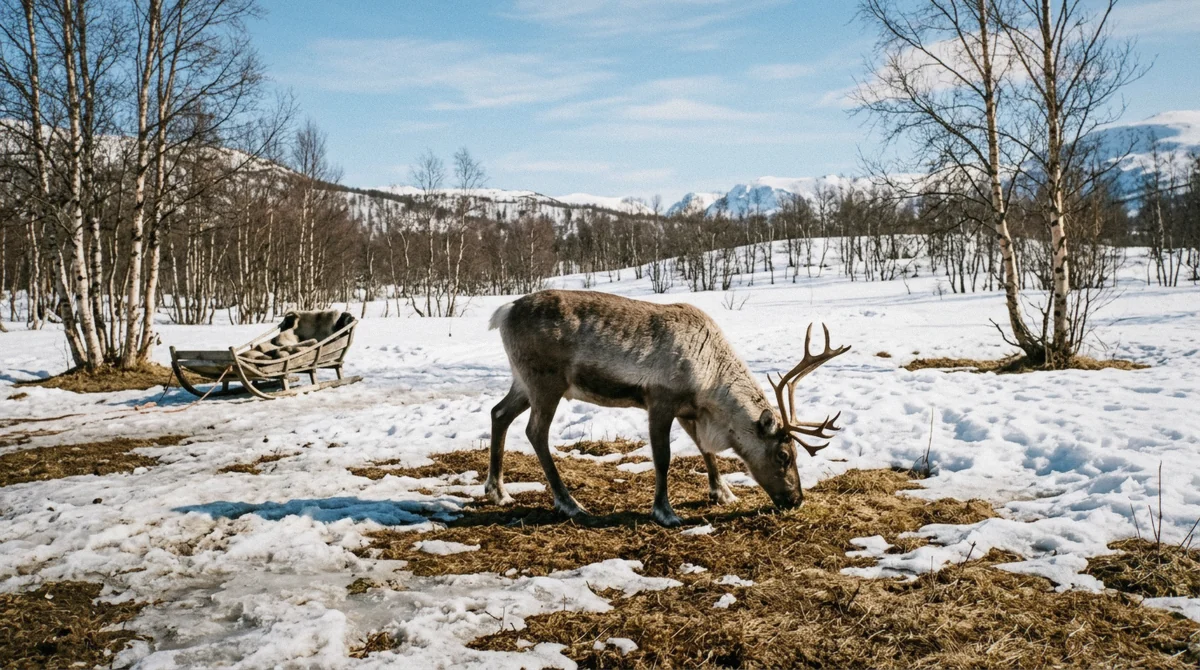
Illustrative image of melting snow in April.
March to Early April: Long Days and the Most Reliable Trails
March is the sweet spot. Snowfall frequency stays at deep-winter levels, 10.8 snow days, while the afternoon high climbs to -2.1°C (28°F) and daylight stretches to about 11.5 hours by mid-March. You get long bright mornings, proper views of the mountains and trails that have been packed since December.
Early April continues the pattern at first, with about 16 hours of daylight and a high of 2.3°C (36°F), before warmer afternoons start to soften the snowpack.
This is the window for scenic routes. The camp at Ramfjordbotn, 45 minutes to 1 hour from Tromsø, looks toward the Lyngen Alps, and its Reindeer Sledding and Sami Cultural Tour with Lunch near the Lyngen Alps gives up to 30 minutes in the sled with those views. The trade-off at the end of the season is real, and the listing states the ride is shortened in poor snow, with a partial refund if it cannot run at all.
Book the first three weeks of March for the best combination of light, cold and depth.
What Actually Decides Whether the Sleds Run
Most people assume the cold is the risk. It is actually the snow depth, and specifically the snow under the runners rather than the snow falling from the sky. A reindeer sled glides on the packed trail, so what matters is a settled snowpack of the kind that builds through December and January.
That is why February and March, with snowfall spread through the month and months of accumulation beneath it, carry the most reliable rides.
- Every sledding listing in the catalog states that the ride can be shortened or cancelled when snow is poor, with a partial refund while the rest of the tour runs.
- The Lyngen Alps listings note the ride is cut short in thin snow, so early-season bookings carry the most weather risk.
- Camp Tamok sits about 90 minutes inland in the Tamokdalen valley, and the area grid used here runs a little colder than the harbour front.
- In April the average afternoon high climbs to about 2°C (36°F), so the season tapers as the snow softens.
Best Time of Day: Morning, Afternoon or Evening
Departure time changes the experience more than any other single choice after the month. The figure below compares the three slots offered across the trips compared here, using typical conditions for the deep-snow months of February and March.
| Slot | What you get | Light | Best months |
|---|---|---|---|
| Morning | The long ride leaves at 9:40 am, the rest of the day stays free | Full daylight from February onward, blue twilight in December and January | February, March, early April |
| Afternoon | The long ride also leaves at 12:40 pm, back before the evening | About 7.5 hours of daylight in mid-February and 11.5 in mid-March, so late afternoon still has light | February, March |
| Evening | Dark-sky sledding, dinner and the chance of the northern lights after the meal | Dark from late afternoon, which is the whole point | Late November through January |
For a first visit in the best months, take a morning slot. You ride in the brightest hours and keep the afternoon for the city. Choose an evening departure in the polar-night months, when darkness is the draw.
There is a wide choice of reindeer sledding tours in Tromsø across all three slots, including the budget-priced Reindeer Sledding or Feeding at a Sami Camp with Storytelling and Photos if you want the cheapest way onto a trail.
Putting the Months Together
February to early April is the answer. The snowpack is at its deepest, afternoon temperatures sit in a manageable -5°C (23°F) to -2°C (28°F) band and daylight grows from about 7.5 hours in mid-February to 11.5 in mid-March. Book a morning or midday slot, aim for the first three weeks of March if you can, and expect the widest choice of departures with the fewest weather shortens.
If the northern lights are the priority and the cold does not worry you, December delivers polar night and the darkest skies of the year. Skip November if a long ride matters most, since it is the month when thin snow most often trims the sled portion. Compare current departures on the reindeer sledding tours in Tromsø catalog before you commit.
Questions and Answers
What is the best month for reindeer sledding in Tromsø?
March, with February a close second. Both average about 10 snow days, temperatures sit near -5°C (23°F) to -2°C (28°F) and daylight returns in force, about 7.5 hours by mid-February and 11.5 by mid-March.
Can you go reindeer sledding in December?
Yes, and it is the best month for the northern lights. Polar night lasts all month, so an evening departure such as the Night Reindeer Sledding, Sami Dinner and Chance of Northern Lights runs entirely in the dark, with snowfall typically at deep-winter levels of about 10 days.
Is there reindeer sledding in October?
No. The season runs roughly from November to early April, and October has only about 2.3 days with a centimetre or more of new snow, with about 9 hours of daylight. Reindeer sledding needs snow, so the listings do not run then.
When is polar night in Tromsø?
The sun does not rise from about 27 November to about 14 January. Days are blue twilight around midday rather than total darkness, which is enough light to run daytime departures in muted conditions.
Can you see the northern lights on a reindeer tour?
Sometimes, in the dark months. Tromsø lies within the auroral zone, where the lights may be visible from late August to early April, but clear skies and darkness are essential. Several evening listings build time outside after dinner to look for them, and all state that sightings are a chance, not a promise.
Is March a good time for reindeer sledding?
Yes, it is arguably the best. Snowfall frequency stays at deep-winter levels while the afternoon high rises to about -2°C (28°F) and daylight reaches about 11.5 hours, so the Lyngen Alps day tour and similar routes run with full views and reliable trails.