 Reindeer Sledding Tromso Norway
Sámi Culture in Tromsø: What You Actually Meet at a Reindeer Camp
A reindeer sledding trip is the easiest way for a visitor to experience Sámi culture in Tromsø, because most camps compared here name Sámi guides or hosts who share food, stories and song around the fire. The culture part is not a bonus. On every trip compared here the sled ride lasts only 10 to 30 minutes, so the hour or two in the lavvu is where the day actually happens. This guide explains who the Sámi are and what Sápmi means, how reindeer herding works today, what a lavvu and a gamme are, what a joik sounds like, what bidos tastes like, and how to behave as a respectful guest. It then ranks the Tromsø reindeer sledding tours by how much genuine culture time each listing gives you, so you can choose a trip that treats the culture as more than a backdrop.
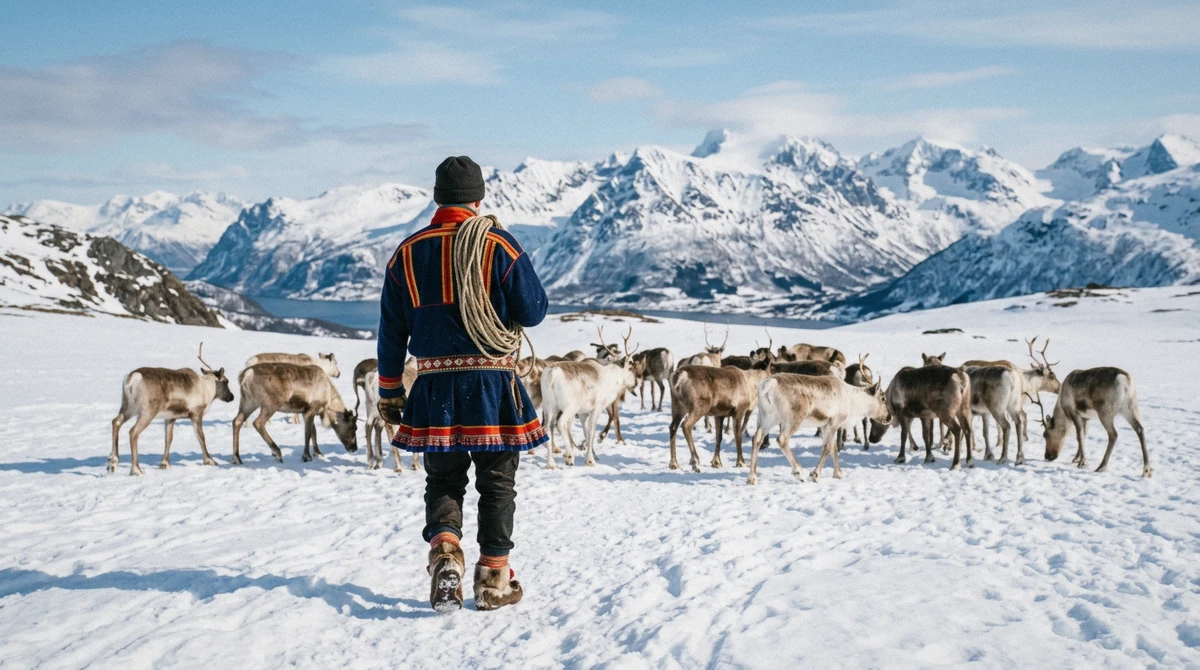
Illustrative image of a herder with the reindeer.
Quick answer Who the Sámi are, what a camp visit includes, and etiquette
The Sámi are the Indigenous people of Sápmi, a region covering large northern parts of Norway, Sweden, Finland and the Kola Peninsula in Russia. On a Tromsø reindeer camp visit you will almost always sit in a lavvu, hear stories about reindeer herding, eat a hot meal such as bidos stew and often hear a joik, the traditional Sámi song form. Some trips also let you try the lasso on antlers and explain the gákti, the traditional clothing. The sled ride itself is short on every listing, so the fire, the food and the stories are the real substance of the day. Ask before photographing people, treat the joik as personal, and avoid the words tribe and Lapps, which many Sámi find wrong or offensive.
Key takeaways
- Small groups mean real conversation, which is why Sami Reindeer Sledding, Lasso and Lavvu Meal in Nordkjosbotn is built around time with a Sámi family
- The joik you hear by the fire is one of the oldest continuous musical traditions in Europe
- Bidos, a reindeer stew with potatoes and carrots, is the dish most camps serve, and most camps offer a vegetarian or vegan alternative
- Sámi National Day falls on 6 February and is marked in Tromsø at the university and the city hall every year
- For the longest sled ride plus a hot lunch and joik in a Sámi tent, see the Long Reindeer Sledding and Sami Culture Tour from Tromsø
Which camp trip fits your interest in Sámi culture
If You want the most personal cultural time, not just a sled ride
Pick the small-group Sami Reindeer Sledding, Lasso and Lavvu Meal in Nordkjosbotn, hosted by a Sámi family with lasso throwing and stories by the fire
If You want the longest guaranteed ride plus a full cultural program
The Long Reindeer Sledding and Sami Culture Tour from Tromsø gives a 30-minute ride, feeding a herd of about 300 reindeer and a joik in the lavvu
If You want culture and food after dark with a chance of northern lights
Choose the Night Reindeer Sledding, Sami Dinner and Chance of Northern Lights with bidos cooked over the fire and stories in a candlelit gamme
If You want to hear about herding life from a Sámi guide in the smallest crowd for the least money
The Reindeer Sledding or Feeding at a Sami Camp with Storytelling and Photos caps the camp at 45 guests and includes 30 minutes of storytelling
If You are unsure whether sledding or dog sledding suits your family
Read our comparison of reindeer versus dog sledding in Tromsø before you book
Who the Sámi are and where Sápmi is
The Sámi are the Indigenous people of Sápmi. That region is not a country but a cultural area stretching across large northern parts of Norway, Sweden and Finland and into the Kola Peninsula in Russia. Tromsø sits inside it.
The old English names Lapps and Laplanders are regarded as offensive by some Sámi, so travelers should simply say the Sámi.
Reindeer herding is the most visible part of Sámi life, but it is not the whole of it. Around 2,800 people work full time in reindeer herding in Norway, and reindeer-herding Sámi make up about 10 percent of all Sámi. In parts of the Nordic countries the right to herd reindeer is legally reserved for the Sámi.
When a guide at a camp talks about the herd, they are describing a living profession, not a performance.
What the words mean: a visitor glossary
Guides use a handful of Sámi words during a camp visit, and knowing them in advance makes the stories easier to follow. This table collects the terms a visitor hears most often at the Tromsø camps, with the plain meaning each one carries on the listings compared here.
| Word | What it means | What you see on a tour |
|---|---|---|
| Lavvu | The Sámi tent, a pointed frame covered with fabric, warm around a central fire | Where most meals, storytelling and joik happen at the camps |
| Gamme | A turf hut, more solid than a lavvu | The night trip serves hot drinks in a candlelit gamme |
| Joik | A traditional Sámi song form, often sung for a person, place or animal | Guides perform a joik by the fire on several listings |
| Bidos | A Sámi reindeer stew with potatoes and carrots, served at celebrations such as weddings | The dinner or lunch dish on several listings |
| Luhkka | A Sámi cape-like outer garment | The guide at the Lyngen Alps day tour checks you in wearing a blue luhkka |
| Sápmi | The Sámi homeland across northern Norway, Sweden, Finland and Russia | The region every camp story returns to |
One more word worth knowing is gákti, the traditional Sámi clothing. Guides explain clothing and artifacts on the day and evening trips near the Lyngen Alps, where Sámi life and clothing are part of the stated program.
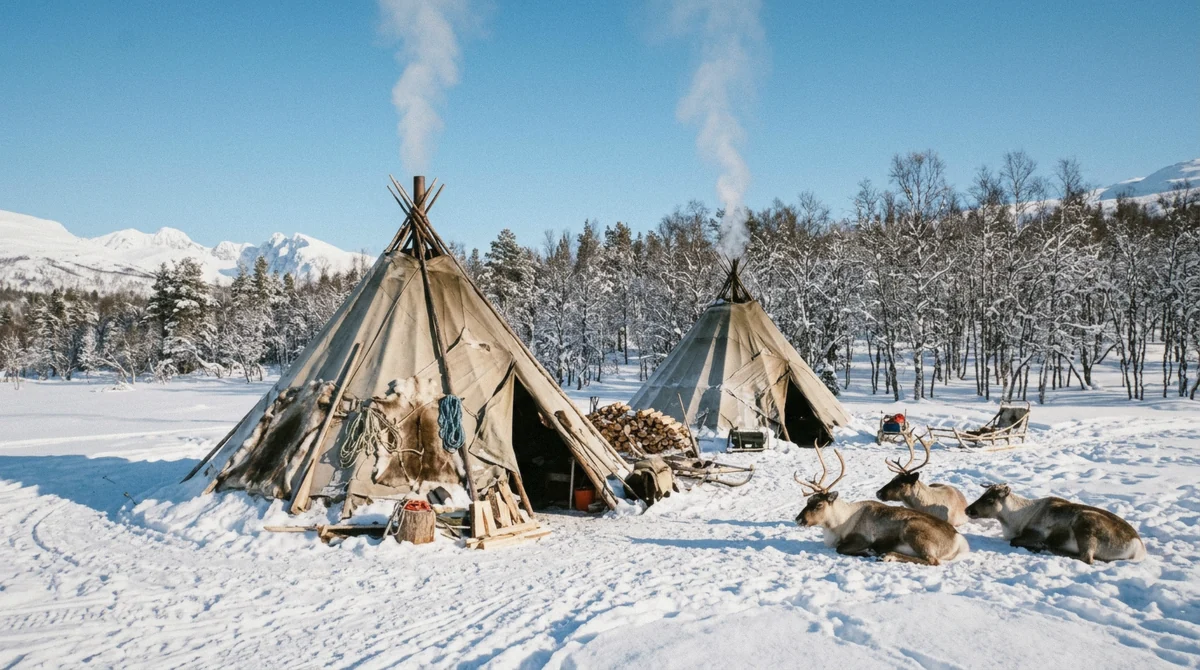
Illustrative image of lavvu tents at a reindeer camp.
A day at a reindeer camp, step by step
The listings differ in details, but the shape of the day is similar. A bus collects you from central Tromsø, often from the Prostneset terminal at Samuel Arnesens gate 5, and drives from 45 minutes to about 90 minutes to a camp on the mainland. You feed the herd by hand first.
Then comes the sled ride, pulled at a calm walking pace while you sit. After that you move inside, to a lavvu or a gamme, for a hot meal around the fire and the cultural heart of the visit: stories about herding life, explanation of artifacts and clothing, and often a joik. The trip ends at the fire and the bus takes you back to town.
For a fuller breakdown of the ride itself, see our guide to what reindeer sledding in Tromsø is like.
Joik, food and clothing: the cultural core
Joik
A joik is a traditional Sámi song form, and music researchers believe it is one of the oldest continuous musical traditions in Europe. Guides at the camp near the city perform a joik by the fire on the long, short and night trips, and it is often the moment visitors remember most.
Bidos and other food
Bidos is a Sámi reindeer stew with potatoes and carrots, traditionally served at celebrations such as weddings. It is the meal on the night trips from both main camps and the lunch on the Lyngen Alps day. Camp Tamok serves a warm stew, the Nordkjosbotn family camp serves soup with bread, and most camps offer a vegetarian or vegan option.
Gákti and the luhkka
The gákti is the traditional Sámi outfit. One listing names a different garment, the luhkka, the blue cape-like outer garment worn by the guide who checks you in at the Radisson Blu Hotel for the Lyngen Alps day tour. Guides explain the clothing and show artifacts during the indoor part of several trips.
If the food and the fire matter more to you than the ride, the Night Reindeer Sledding, Sami Dinner and Chance of Northern Lights builds its whole evening around bidos cooked over the fire, stories in the lavvu and hot drinks in a candlelit gamme.
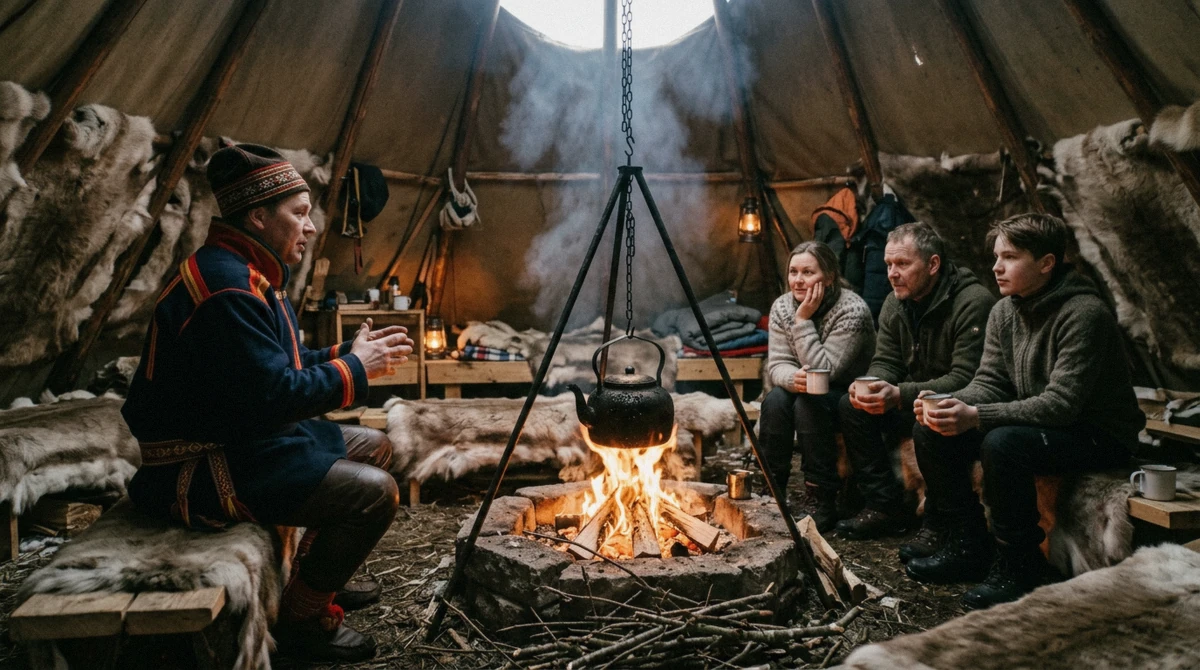
Illustrative image of storytelling inside a lavvu.
Reindeer herding today
Herding is a living profession. Around 2,800 Sámi work in herding full time in Norway, and in some regions the right to herd is legally reserved for Sámi. The herds at the Tromsø camps are working animals, not pets.
That is also why the camps have rules you should expect. On one listing riding the animals is not allowed. On several trips you can try the Sámi lasso, and you throw it at antlers, never at live reindeer.
Treat the herd with the same respect you would want for someone's livestock, because that is exactly what it is.
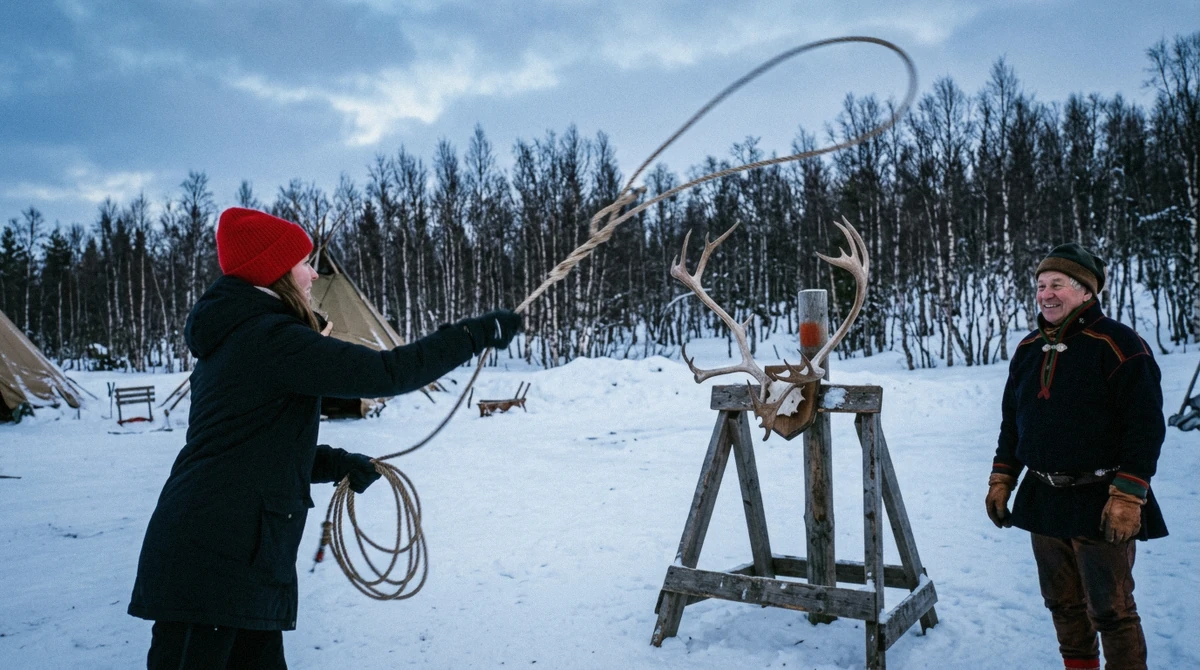
Illustrative image of the lasso, thrown at antlers, never at live reindeer.
Sámi National Day in Tromsø
Sámi National Day falls on 6 February, marking the first Sámi congress held in Trondheim in 1917. If your trip falls in early February, you can see the day marked in Tromsø itself, at the university and at the city hall. The camps run all winter, so a visit in early February is straightforward, and you can read our guide on the best time for reindeer sledding in Tromsø for seasonal detail.
Etiquette: how to be a good guest
- Ask before you photograph people. Camps are workplaces and homes, not film sets, and hosts appreciate being asked first. Photographing the reindeer and the landscape is normally fine.
- Do not call the Sámi a tribe. They are an Indigenous people. The words Lapps and Laplanders are regarded as offensive by some Sámi and should not be used.
- Treat the joik as personal. A joik can belong to a person, so the polite reaction is to listen, not to request one on demand or record it without asking.
- Dress properly. Every listing asks for at least two warm layers, gloves, a hat and winter boots, and several lend thermal suits. Arriving unprepared makes the host lend you gear and eats into everyone's time.
- Ask real questions. Guides are happy to talk about herding, language and modern Sámi life. Curiosity is respect, silence is just silence.
Following them costs nothing and changes how the day feels for everyone.
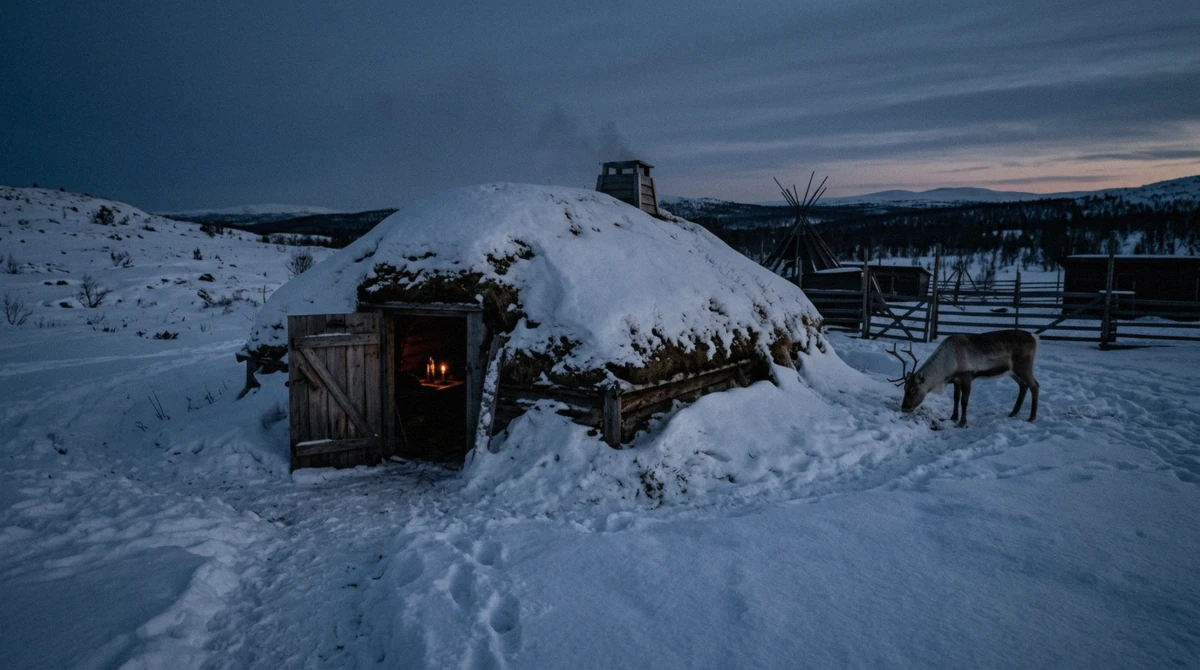
Illustrative image of a gamme.
Which trips give you the most culture time
This section compares the trips on this catalog by the cultural elements each listing states: who hosts, how big the group is, what indoor program is named and what food is served. Prices and durations come from the listings themselves, and every one offers free cancellation up to 24 hours before the start.
| Trip | Hosts and setting | Cultural program stated | Duration and price |
|---|---|---|---|
| Sami family camp in Nordkjosbotn | Small group with a Sámi family, about 1 hour by bus | Lasso throwing on antlers, stories of herding life, soup and bread in the lavvu | 5.5 hours, $254 |
| Long Reindeer Sledding and Sami Culture Tour from Tromsø | Camp near Tromsø, herd of about 300, guide in English | Hot lunch in a Sámi tent, stories by the fire, joik from the guide | 4 hours, $227.47 |
| Sled or feed with storytelling and photos | Camp about 1 hour away, up to 45 guests, personal guide | 30 minutes of storytelling by Sámi hosts, professional photos included | 3.5 hours, $113 |
| Night sled with Sami dinner | Camp near Tromsø, candlelit gamme and lavvu | Three-course dinner with bidos, stories and joik in the lavvu | 4.5 hours, $222 |
| Lyngen Alps day with lunch | Camp at Ramfjordbotn, guide in a blue luhkka | Bidos lunch, Sámi life, culture and clothing explained | 4.5 hours, $233 |
| Camp Tamok day trip | Wilderness camp in the Tamokdalen valley, 5 to 6 reindeer | Sami storytelling and feeding, warm stew in the lavvu | 7 hours, $220 |
If pure culture per dollar is the measure, the $113 sled or feed trip and the Nordkjosbotn family camp stand out, because both are built around time with Sámi hosts rather than around the ride.
How the camps compare beyond culture
Culture time is not the only difference between the listings. Group size, sled-ride length and weight rules change the day just as much, so this table lines up the practical facts from the same listings before you choose. You can also read our full guide to reindeer sledding in Tromsø with kids if you are bringing children.
| Trip | Sled ride | Group size | Weight rule |
|---|---|---|---|
| Nordkjosbotn family camp | 10 to 15 minutes | Small group | None stated |
| Long trip from Tromsø | 30 minutes | Up to 70 per departure | None stated |
| Sled or feed camp | Forest-trail ride if you pick that option | Up to 45 at the camp | None stated |
| Night sled with dinner | 15 to 20 minutes | Large bus group | None stated |
| Lyngen Alps day | Up to 30 minutes in a raid | Large group | 110 kg (243 lb) |
| Camp Tamok | Short ride | None stated | None stated |
Notice the pattern. The smallest cultural experiences come with small groups, and the longest rides come with big buses. There is more on this tradeoff in our guide to reindeer versus dog sledding in Tromsø.
For the evening with the strongest cultural program after dark, the Reindeer Sledding with a Chance of Northern Lights and Bidos Dinner adds Sámi history, artifacts and a bidos dinner to a ride of up to 30 minutes.
Common misunderstandings to drop at the door
A few expectations visitors bring to a reindeer camp simply do not match reality, and clearing them early makes the day better for you and easier for your hosts.
- The reindeer are not tame. They belong to working herds. Hand-feeding is a privilege, not a petting zoo.
- The day is not mostly sledding. Every ride here lasts 10 to 30 minutes. If you want speed, dogs run much faster than a reindeer walks, which is why our reindeer versus dog sledding comparison matters.
- The camp is not a museum. These are working reindeer and living hosts. Guides answer questions about modern Sámi life as readily as about tradition.
- Riding on the animals is not allowed on one listing, and throwing a real lasso at a live reindeer is not part of any trip. The lasso is practiced on antlers instead.
- Reindeer sledding is not a summer activity. The listings run in the snow months, roughly from November into early April.
Choosing a respectful trip
The most respectful choice is usually the one that puts the most value on Sámi hosts rather than on the ride. Small groups, named Sámi families, storytelling that runs half an hour or more and food cooked over fire are the markers to look for, and they are exactly what separates the Nordkjosbotn family camp and the storytelling camp from the big-bus trips. Look for a listing that names a Sámi guide or host.
Before you book, check reindeer sledding Tromsø trips for current prices and availability, dress for the cold described in our what to wear guide, and arrive ready to listen. The sled ride is the photo. The fire, the joik and the conversation are the trip.
Questions and Answers
What is Sámi culture?
It is the living culture of the Sámi, the Indigenous people of Sápmi, which spans northern Norway, Sweden, Finland and the Kola Peninsula in Russia. It includes Sámi languages, the gákti clothing, joik singing, and reindeer herding, which around 2,800 people in Norway do full time. Visiting a reindeer camp near Tromsø gives you a short, hosted introduction to it.
Can you visit a Sámi camp from Tromsø?
Yes, and several run daily in winter. The camps compared on this site sit from a short seaside drive to about 90 minutes by bus from the city, and every listing includes transport. The Reindeer Sledding or Feeding at a Sami Camp with Storytelling and Photos is the cheapest way in, shown at $113.
What is a joik?
A joik is a traditional Sámi song form, often sung for a person, animal or place rather than about one. Music researchers believe it is one of the oldest continuous musical traditions in Europe. Guides perform a joik by the fire on several Tromsø camp trips, and it is usually a personal expression, so listen rather than request.
What is a lavvu?
A lavvu is the Sámi tent, a pointed fabric structure with a central fire, used as a warm gathering space at every camp compared here. A gamme is the related turf hut, and the night trip serves drinks in a candlelit one. You will spend most of your camp time inside one of the two.
What food do the Sámi eat?
At the camps the signature dish is bidos, a reindeer stew with potatoes and carrots traditionally served at celebrations such as weddings. Other trips serve warm soup with bread or a hot stew by the fire. Every listing offers a vegetarian or vegan option, and coffee or tea is always included.
How should you behave at a Sámi camp?
Ask before photographing people, treat the joik as personal, and never use the words tribe or Lapps, which many Sámi find wrong or offensive. Dress warmly so the host does not have to lend you gear, feed the reindeer only as invited, and ask genuine questions. Curiosity and courtesy are the whole of it.